

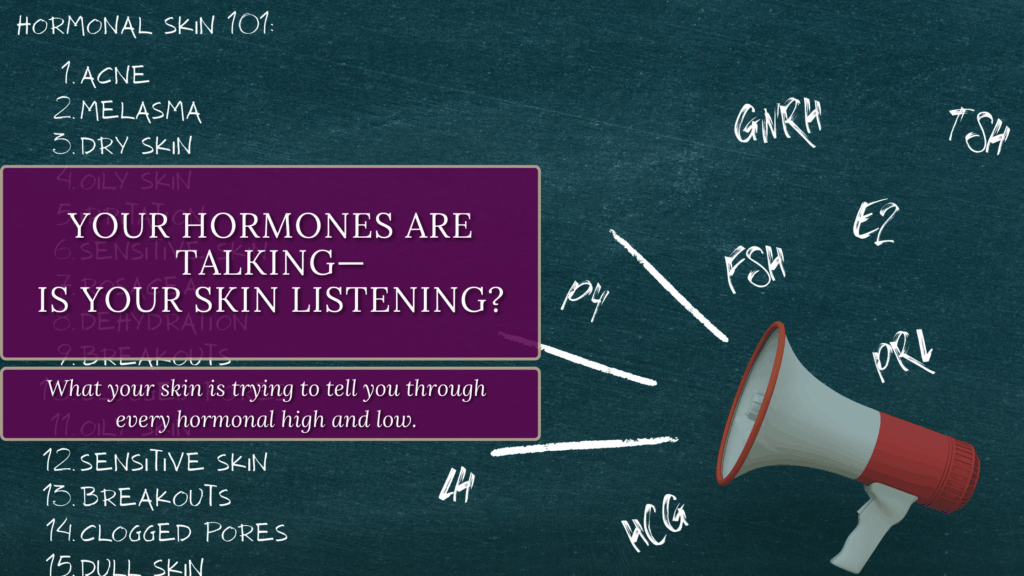
Your Hormones Are Talking—
Is Your Skin Listening?
What your skin is trying to tell you through every hormonal high and low.
Understanding Your Skin: More Than Just a Surface Issue
As a licensed esthetician, I’m always surprised by the frequency with which clients convey that they don’t really understand the importance or benefits of a facial. And it’s not a superiority complex thing, it’s genuine surprise. In our society, we talk so much about self care and its importance, but we often lack the tools to truly understand not just the how, but also the why. How do i best take care of my skin? Why is it important and why is it self care rather than luxury? And then hormones? Their affect on skin is massive. So let’s talk Hormone-Informed Skincare!
To add fuel to the fire, skin has a unique ability to react to external factors like the sun, pollution, makeup, etc. while also reacting (sometimes identically) to internal factors like hormones, blood flow, stress, etc.
With an organ (yes, your skin is an organ!) that is both huge (*remember, it covers your entire body*) and so reactive, it’s important to take care of it, and equally important to understand it. The key is understanding your OWN skin. Its needs, its triggers, its “sweet spot”.
Now, before we jump in with both feet and get to know your skin, if haven’t yet read Your Hormones Called— They Want to Talk About Your Mood, go check it out!
Because if hormones can change your skin, imagine what they can do to your mind. 🤯
Let’s Talk About Facials (and Why They’re More Than Fancy Lotion and Steam)
Anatomy of a Professional Facial
We know that facials are good for the skin, but why? What happens in a facial that makes it so beneficial? Why go out of your way to get a facial rather than doing it at home? First and foremost, let’s talk about the basic steps of a professional facial.
Step 1: Cleanse
- Cleansing is the first essential step as it removes dirt, makeup, debris, etc. from the surface of the skin.
- Some estheticians do a double cleanse, which includes starting with an oil cleanser and following up with a foaming or creamy cleanser.
Step 2: Exfoliate
- Exfoliation is a process that removes dead skin cells from the surface of the skin. *Note: Exfoliation is not as effective if it’s done prior to cleansing.
- There are 3 main types of exfoliation, each with its pros and cons.
- Manual/Mechanical Exfoliation
- Using an abrasive material like cornmeal, jojoba beads, crushed walnut shells, etc. to buff away dead skin cells
- An alternative is using an exfoliation tool like a Dermafile, which functions in a similar way to a nail file/emery board, but it made of cosmetic grade crushed diamonds.
- Enzymatic Exfoliation
- Enzymes from fruits like pineapple, papaya, pumpkin, and more digest/dissolve dead skin
- Chemical Peel
- Chemical peels are made using specific types of acids, typically AHA’s (alpha hydroxy acid) and/or BHA’s (beta hydroxy acid) to dissolve the bonds between dead skin cells
- AHAs – glycolic, lactic, citric, mandelic
- BHA – Salicylic
- Manual/Mechanical Exfoliation
- There are 3 main types of exfoliation, each with its pros and cons.
Step 3: Masque
- Masques can be deeply nourishing, hydrating, detoxifying, and so on. They are formulated to provide intensive treatment and are applied to the skin for about 5-15 minutes towards the end of the facial.
- The masque or mask portion of a facial is an intensive treatment that varies depending on the specific facial treatment and the product itself.
Step 4: Moisturize
- Moisturizer serves as a moisture attracter, moisture-loss barrier, and skin softener/smoother, rather than a deliverer of moisture.
- Humectant
- Emollient
- Occlusive
Step 5: SPF
- SPF aka Sun Protection Factor provides skin with either physical or chemical protection against the harmful rays of the sun
All of these components of a professional facial work together to keep your skin healthy, protected, and happy.
Why You Can’t Quite DIY This One
Professional Expertise Meets Personalized Care
How is it different than just doing it at home? Well, for one a licensed esthetician can use professional grade products safely that you may not be able to use at home. Professional grade products may have more potent ingredients, higher percentages of acids, or they may be formulated in a way that only a licensed professional would be trained to fully understand an execute safely.
In addition, a professional facial gives you a chance to relax and not have to do a thing. If you do it at home, there’s no real relaxation for you.
Also, a licensed skin care expert is trained in thorough skin analysis and can customize your facial to your exact needs, down to the microscopic issues.
In fact, when it comes to the huge changes that reproductive hormones bring to the skin, a licensed professional has the knowledge and training to give your skin a stern talking to and get its act together.
When Hormones Crash the Skincare Party
Why Hormones and Skin Are So Closely Connected
Facials are important for all skin, but once you involve hormones… it’s a whole new ballgame. Hormone changes are part of life, they’re unavoidable. Part of being a human is the release of hormones. What people often forget is that hormones go far beyond what we immediately think about.
If someone says to you, “I’m feeling hormonal”, what’s your first thought? Maybe you thought about someone starting their menstrual cycle? But here’s the fact, not all hormones are related to the reproductive system.
However, when it comes to skin… it’s mostly the reproductive hormones that make the biggest splash.
Infertility, Fertility Treatments, and Your Skin’s Reaction to the Roller Coaster
The Fertility Treatment Effect: Hormones on Overdrive
When we talk about skin and infertility, there are 2 factors to consider:
- Fertility Treatments
- Infertility Diagnosis
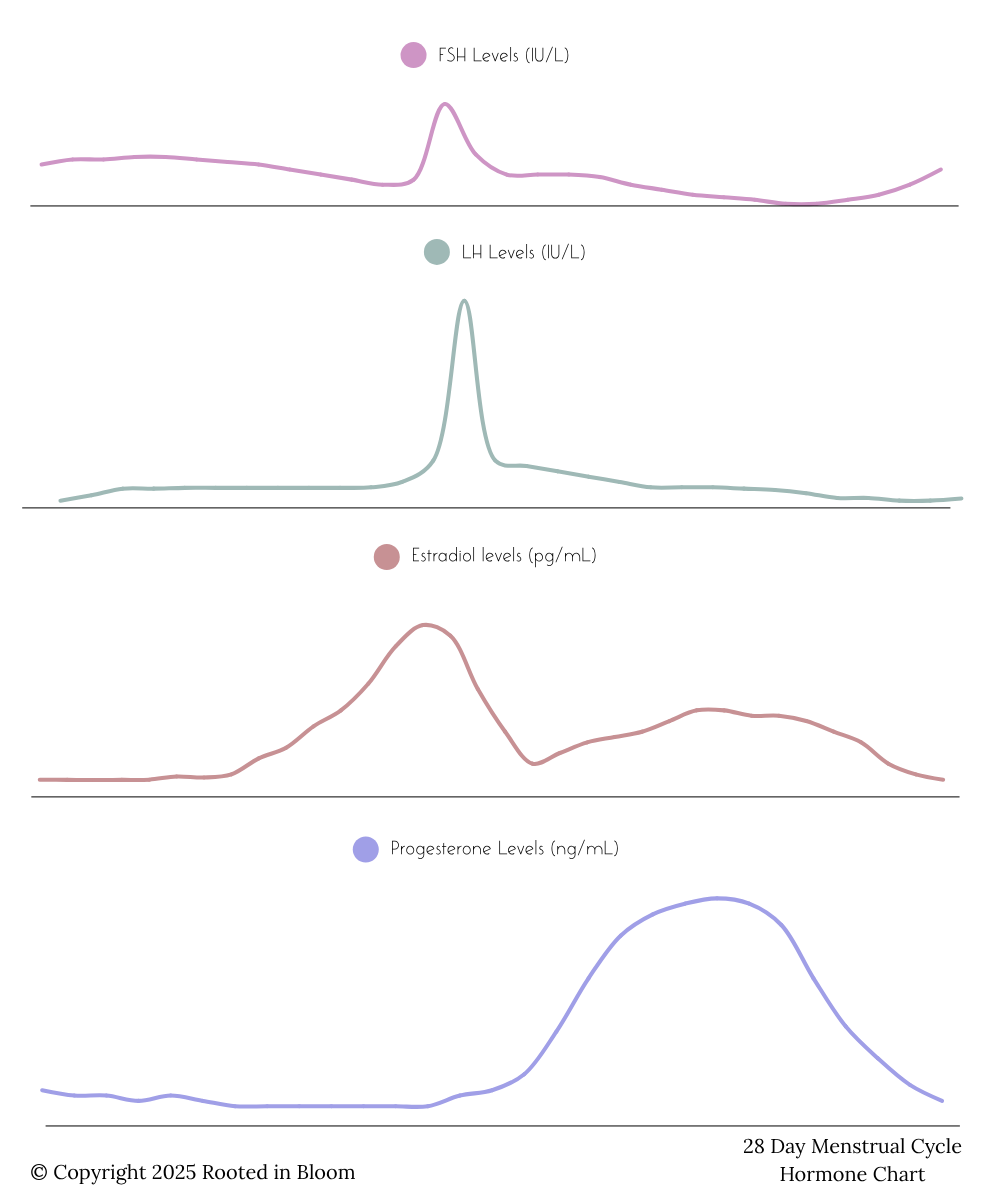
And when we take infertility out of the equation and focus just on TTC (Trying to Conceive), we have to look at the menstrual cycle.
Fertility treatments utilize injecting or stimulating hormones in order to achieve a specific result, ie. pregnancy, ovulation, ovulation suppression, etc. As we talked about before, hormones– especially reproductive hormones, have a major impact on skin.
Often overlooked is how fertility treatments affect the skin. There’s such a big focus (rightly so!) on how it affects the mind, and in turn the body, but the skin is afterthought, and in most cases and nothing-thought. But why? The fact of the matter is, fertility treatments can have a massive impact on the skin and cause all kinds of issues like acne, excessively dry skin, hyperpigmentation, excessively oily skin, and so on. What’s the link here? REPRODUCTIVE HORMONES!
Let’s take a step back and remember what is happening during fertility treatments. The sole purpose of a fertility treatment is to conceive a pregnancy. And what is absolutely vital to a successful pregnancy? REPRODUCTIVE HORMONES! As we’ve already explored, reproductive hormones can wreak absolute havoc on the skin. Add in cortisol (the stress hormone) and what do you get? Triggered skin.
But what does this look like? Well, if you’re post IVF embryo transfer then you’re likely deep in progesterone injections. Progesterone, while vital to a successful early pregnancy, can cause a massive increase in oil production. Excessive oil can clog pores, make you look like an oil slick, and trigger those pesky blemishes.
Similarly, high levels of Estrogen (also vital to pregnancy success!) can cause excessive oil production, acne, & melasma (darkening of the skin). Estrogen can also cause dry skin, redness, & sensitivity. But that’s not all! Part of the process of IVF is stimulating the growth and maturity of eggs, so specific levels of FSH and LH are a big factor as well. And these hormones are no different in terms of their desire to mess with your skin.
Increased levels of FSH can cause excessive oil production, leading to oily skin and potentially acne. FSH can also do the exact opposite and cause excessively dry skin. Increased sensitivity and skin irritation are also common with heightened levels of FSH.
If an IVF protocol calls for Lupron (which is a medication that suppresses ovulation), this can cause all the same issues with acne, dryness, and skin irritation.
The Aftermath: When Hormones Drop Off a Cliff
Let’s flip the script. What happens when a fertility treatment is not successful, and you have a sudden drop off in these hormones? There’s no smooth transition. Negative pregnancy test? No more progesterone injections and no more estrogen production. You go from super high levels to instant super low levels. From one extreme to the next.
Now that the excessive oil production has dropped off rapidly, what’s the next logical step? Excessively dry skin. Rather than the oil slick from before, we’re now looking at a desert.
But wait! There’s more…
Infertility Causes That Affect Skin
What about common (and uncommon) causes of infertility? Are there specific hormones involved? Yes. There are many potential causes of infertility, some more commonly referenced than others, and some that are unclear.
Some examples are PCOS, endometriosis, diminished ovarian reserve, uterine fibroids, uterine polyps, blocked tubes, male factor infertility, Addison’s disease, primary ovarian insufficiency, Hashimoto’s Thyroiditis, and many more.
How to Soothe Skin During the TTC Journey
So what can you do about it? Well, essentially there are 2 main things you can do.
- Prepare for your skin to do its own thing. Know ahead of time that your skin as you currently know it may become the total opposite of what you’re used to, or issues you’re already dealing with may become more extreme.
- GET YOURSELF A FACIAL!
What’s the benefit of going in for a professional facial? The benefit is 2 fold. First, your skin gets analyzed and treated properly for whatever issue you are struggling with, plus professional product and daily routine recommendations. Secondly, and maybe more importantly you get to RELAX. Infertility in itself is so incredibly stressful and traumatic, but going through fertility treatments is an entirely different level of stress. It’s near impossible to relax as an infertility warrior, but getting in and taking care of your skin is a great first step toward calm.
The Restorative Facial — Designed for Fertility Support
At Rooted in Bloom, if you’re “Currently Sowing Some Seeds” (aka infertility/ttc), then our Restorative Facial is what you’re looking for! This facial is designed for women going through fertility treatments and/or struggling with a condition affecting their fertility, that may have a direct effect on reproductive hormones. Due to the ups and downs of all of these hormones, skin responds, and needs some love! And that’s what our Restorative Facial can do. It will restore balance, and leave your skin feeling normal again.
Pregnancy Skin: Glowing, Breaking Out, or Both?
The Hormones Behind That “Pregnancy Glow” (and the Not-So-Glowy Bits)
If pregnancy is up next in your reproductive journey, you may notice some hormonally induced skin issues. Issues like melasma, hyperpigmentation, acne, oily skin, etc. are SUPER duper common in pregnancy. Throughout each trimester of pregnancy, a variety of reproductive hormones spike and drop causing all kinds of skin drama.
What Each Trimester Can Bring to the Surface
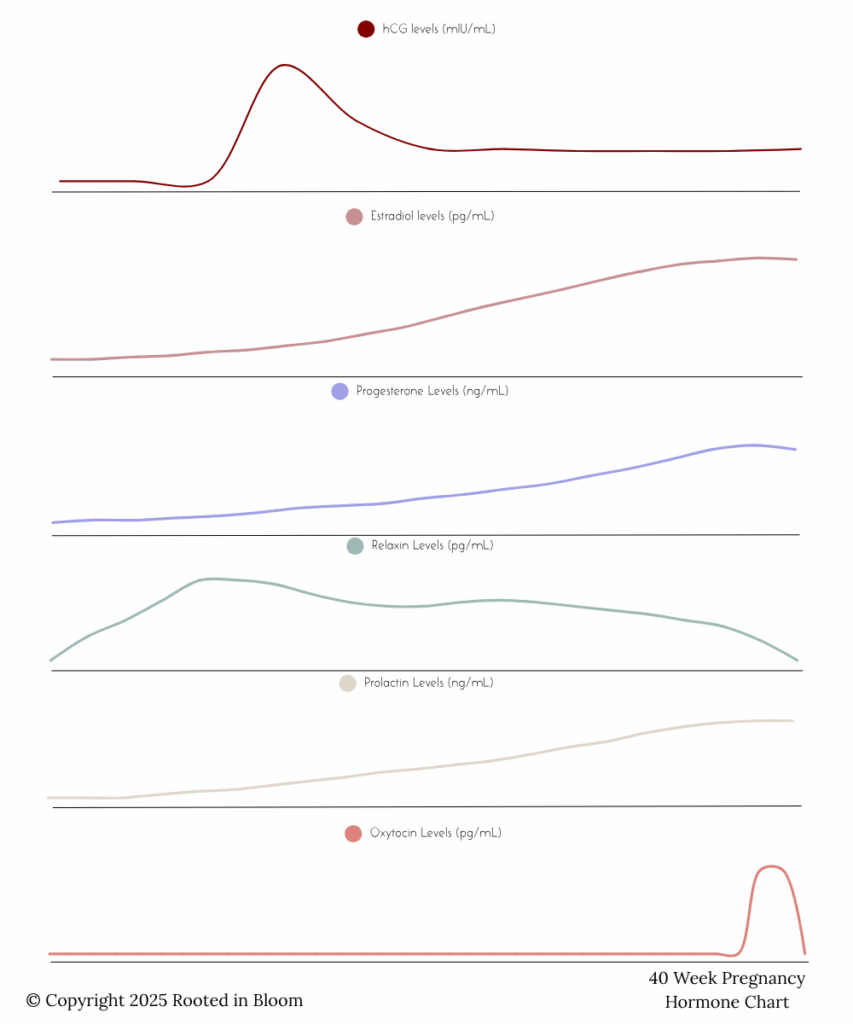
When it comes to pregnancy hormones, the one you’ve likely heard the most about is hCG, aka Human Chorionic Gonadotropin. Otherwise known as “the pregnancy hormone”. hCG detection in either the blood or in urine is the first indicator of pregnancy. As important as hCG is (pregnancy cannot exist without the presence of hCG) it also plays a big role in common skin issues during pregnancy.
Some of the more common effects of hCG on the skin are skin irritation including redness & itching, excessive oil production (often leading to acne), clogged pores, and more. In some cases, hCG can have less negative effects and in many cases is the cause of the “pregnancy glow” due to improved skin elasticity, which can also reduce the appearance of fine lines and wrinkles. While neither the positive effects or negative effects are 100% across the board, these issues are common.
Progesterone and Estrogen are the other big hormones involved in pregnancy. A common skin condition that occurs during pregnancy is melasma, often known as “the mask of pregnancy” or “pregnancy mask”. Melasma occurs in some women due to an increase in progesterone and estrogen. When these hormones increase, they can also stimulate melanin production. Melanocytes are skin cells that produce melanin. When estrogen and progesterone increase, melanocytes essentially get super excited, become overactive and produce excessive amounts of melanin. Rather than causing and overall darkening of the skin, melasma often shows up in patches on the face.
Other important pregnancy hormones are Relaxin, Oxytocin, Prolactin, and hPL (Human Placental Lactogen). These hormones are less involved in affecting the skin, but there are some important things to note.
Relaxin is released throughout pregnancy to relax ligaments and other tissues to help prepare the body for childbirth. In terms of its effects on skin, the main issues are reduced skin elasticity (skin not “bouncing back” as it normally would), increased likelihood of stretch marks, and increased skin sensitivity.
Oxytocin has a more positive impact on skin due to its potential anti-inflammatory effects. Skin repair may be promoted by Oxytocin, while redness and irritation may be soothed.
The purpose of prolactin is to develop mammary glands which produce breastmilk. However, Prolactin can also play a role in increased acne during pregnancy due to its stimulation of adrenal glands. These glands can then secrete more androgens than normal, which can potentially stimulate sebaceous glands to produce excess sebum (oil) and increase the proliferation of skin cells, both of which can clog the pores and increase the possibility of acne. In addition, Prolactin can promote the proliferation of keratinocytes (cells that produce keratin) and cause the skin to develop rough patches, calluses, and bumps, which can also clog pores and cause blemishes.
Your Skin’s New Best Friend: The Renewal Facial
During pregnancy, your growing baby has developed “roots” aka blood vessels within the placenta that connect the baby directly to your bloodstream. Within Rooted in Bloom, we like to call pregnancy “Rooted in Growth”. If you fall into this category, you’ll want to schedule yourself a Renewal Facial! Taking the time to relax (essential in pregnancy!) and renew those skin cells, will make a huge difference in how you feel and your skin’s ability to protect itself, and stay strong and healthy.
Postpartum Skin: The Beautiful (and Exhausting) Chaos
Hormones, Sleep Deprivation, and That New-Mom Glow (or Lack Thereof)
Ah the joys of the postpartum period! That was sarcasm, in case you couldn’t tell. The postpartum period is a major roller coaster ride, which may be even more dramatic than the roller coaster ride that is pregnancy! With pregnancy, the roller coaster is really rooted in the major spikes in hormones (some of which you’ve never experienced before– ie: hCG). But when it comes to the postpartum period, it is marked by multiple things occurring all at once including both spikes and drops in hormone levels PLUS the new experience of caring for another human being (or 2! OR more in the case of higher order multiples like triplets, quadruplets, etc.) So this roller coaster ride is 2 fold. The physiological roller coaster, and the psychological roller coaster. Both of which have a huge impact on the skin.
When your body releases excessive amounts of cortisol, as is common during the posptartum period, the skin doesn’t just close its eyes and go to sleep, it responds, and not always politely. High levels of cortisol increase sebum (oil) production which can clog pores, and result is acne. Cortisol doesn’t stop there! These higher levels can also do the opposite. Cortisol can cause inflammation, which can impair the skin barrier, causing the skin to struggle to maintain moisture, creating dryness, irritation, and/or itching. Indirectly, adding to the mix is sleep deprivation which is super common during the postpartum period. Lack of sleep can massively impact the skin’s ability to repair itself.
The Love Hormone to the Rescue
Now for the crossover hormone, oxytocin. Why do I call it a “crossover hormone”? Well, oxytocin is both focused on psychology and physiology. Oxytocin is often known as the “love hormone” because psychologically speaking, oxytocin helps initiate and strengthen the emotional bond between mother and baby, reduces stress and anxiety, triggers feelings of euphoria, love, well-being, & happiness, and increases the mother’s protective response to her baby.
On the physiological side of things, Oxytocin affects skin dramatically differently than many of the hormones we’ve been talking about! Typically, oxytocin has only positive effects on the skin including, reduced inflammation, lowers cortisol levels, promotes better blood circulation which helps deliver oxygen and nutrients to the skin, may support collagen production and wound healing.
When the Hormones Drop, the Skin Reacts
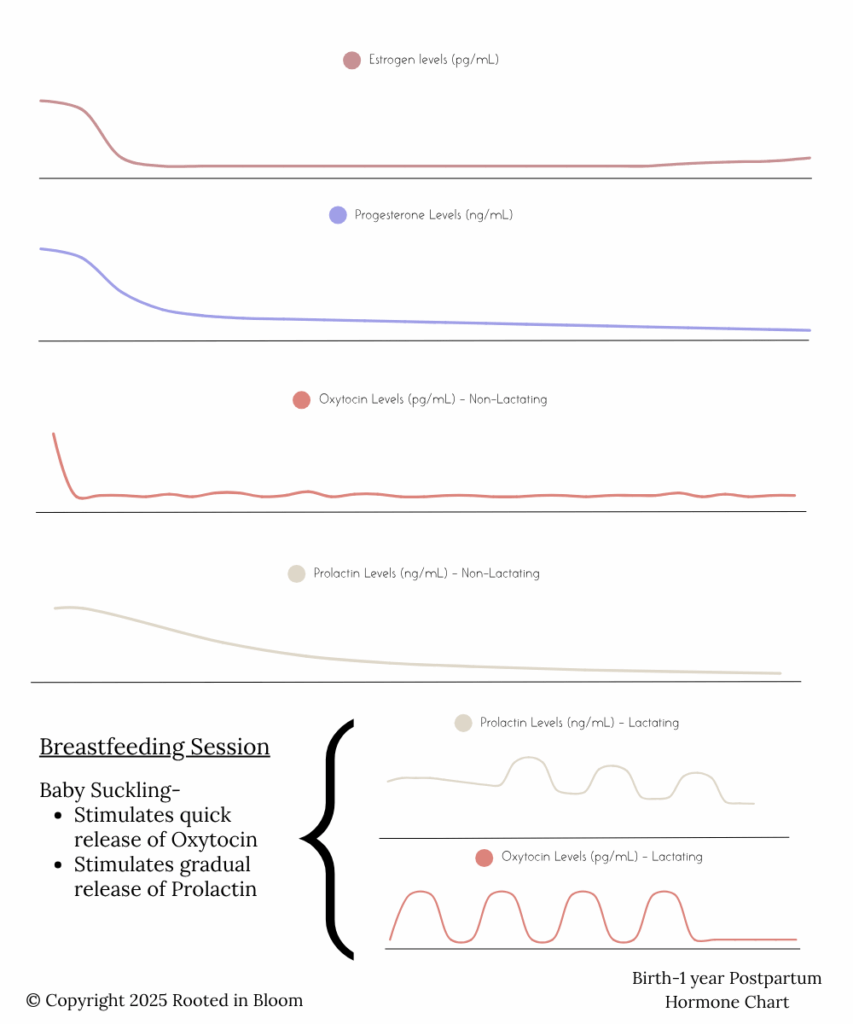
Estrogen and Progesterone, the common denominator among all reproductive hormone changes and phases, have a MAJOR effect on skin during the postpartum period, most specifically immediately following childbirth.
The interesting thing about estrogen and progesterone, especially during the postpartum period, is both their equally dramatic drop off after birth, but also their differing effects on the skin… at the same time.
With a steep drop in Estrogen comes an overproduction of sebum (oil naturally produced by the skin) which can clog pores and cause acne breakouts. Interestingly, the same drop in Estrogen can cause dry skin due to impairment of the skin’s ability to retain moisture. This also leads to a compromised skin barrier, which is never a good thing.
Progesterone has similar effects on the skin during the postpartum period. Prior to childbirth, high levels of progesterone can overstimulate the sebaceous glands, causing them to produce excess sebum. After birth, while progesterone levels sharply decline, Prolactin levels increase. The increase in prolactin can also increase Similar to estrogen, progesterone can also cause the exact opposite issue, and leave skin excessively dry when the levels drop off so dramatically.
Prolactin is the hormone responsible for stimulating lactation though it has other functions such as regulating the menstrual cycle, inhibits the release of cortisol, and may play a role in maintaining bone density in women post-menopause.
High levels of prolactin can increase secretion of adrenal androgens which stimulate sebaceous glands, in turn increasing oil production and causing clogged pores and acne breakouts. Because prolactin suppresses estrogen production, this can also result in the opposite problem, excessively dry skin. Alternately, prolactin can inhibit epidermal regeneration, which affects the skin’s ability to repair itself.
Additionally, during the postpartum period, Relaxin (secreted throughout pregnancy), drops off significantly in the days following childbirth, and takes 6-12 months to reach pre-pregnancy levels. Despite this initially drop, relaxin continues to impact skin. Relaxin makes skin more elastic and less firm, which can lead to loose skin. While this loose skin is primarily around the abdominal region, facial skin can be affected as well.
Thyroid hormones regulate the mother’s metabolism and supports lactation. However, hyperthyroidism (high thyroid hormone levels), and hypothyroidism (low thyroid hormone levels) have an impact on many things, while hypothyroidism affects the skin more than hyperthyroidism. Low levels of thyroid hormones can cause dry, rough, and sensitive skin.
The Rejuvenation Facial — Buds Are Blossoming
At Rooted in Bloom, we like to refer to the postpartum period as “Buds are Blossoming” as your babies/children (buds) are actively blossoming (growing)! Our Rejuvenation facial is designed specifically for the postpartum period and will rejuvenate your skin! It’ll give you a chance to step away from the babies/children, clear your mind for a few hours, and leave you feeling rejuvenated.
The Wild, Wonderful Circus of Skin Changes
Why Your Skin Feels Different (Even When You’re Doing Everything Right)
The more commonly experienced symptoms of perimenopause are brain fog, irritability, mood swings, hot flashes, insomnia, fatigue, and more. But what is so often overlooked, is how skin gets affected by all these hormonal changes as well. There are so many changes happening, that skin is inevitably affected, but people often don’t attribute it to the changes that are directly related to perimenopause. Let’s change that!
Estrogen, Progesterone, Testosterone—The Trio That Keeps You Guessing
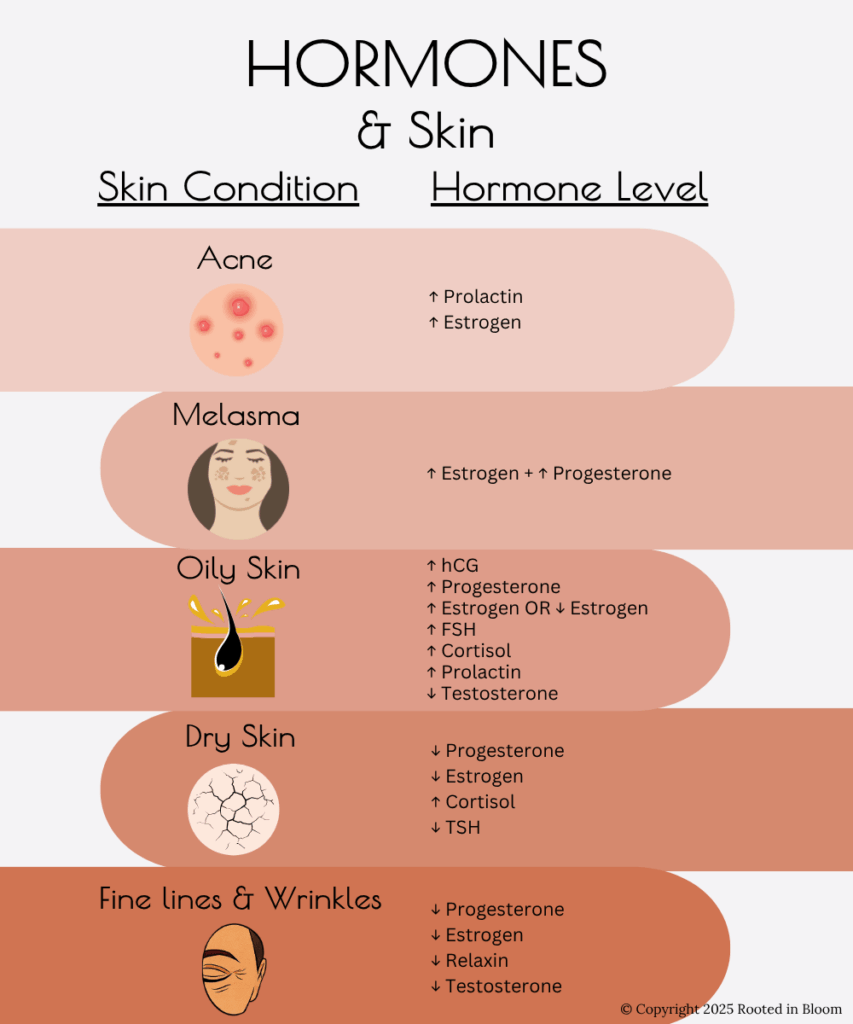
First and foremost, Estrogen has a big effect as during perimenopause, this hormone declines, which can cause dry skin, itchiness, thinning of the skin, and loss of elasticity due to less collagen and elastin fibers, which can cause saggy skin and more noticeable fine lines and wrinkles. Low estrogen can also slow down the skin’s ability to heal itself.
Similar to the declining levels of Estrogen, is a marked decline in Progesterone levels. By itself, a loss in progesterone can lead to increased dryness and sensitivity. However, progesterone does not only function individually, it also works WITH estrogen as a team. Normal levels of estrogen and progesterone function together with progesterone helping to balance estrogen’s effects. But a drop in progesterone can affect how it heps to balance estrogen. Because these hormones don’t have exact “schedules” for how they drop off, and they don’t all drop off at exactly the same rate or at the exact same time, the imbalance can cause increased sebum production which can lead to acne flare-ups as the skin struggles to maintain itself.
Progesterone, like Estrogen helps with skin elasticity and collagen production, so as it declines, it can trigger the same loss in skin firmness as estrogen, leading to sagging, loose skin and more visible fine lines and wrinkles. Add to add to the fun, progesterone can also cause the skin to appear dull rather than glowing and vibrant.
Testosterone isn’t just a “man’s hormone”. In fact, testosterone is a naturally occurring hormone is all humans, regardless of gender. The difference is the level of testosterone naturally produced in the body. Testosterone is an important hormone, so even though the levels are naturally lower in women, it is still important. During perimenopause, testosterone levels decline, along with all of the other reproductive hormones. This decline can cause an increase in sebum production, resulting in acne breakouts. One of the most important effects of testosterone on skin is its function in maintaining skin thickness. The decline during perimenopause contributes to the loss in skin density and adds to the sagging and dullness that both Estrogen and Progesterone already cause.
Stress, Cortisol, and the Great Collagen Heist
As we’ve talked about previously, cortisol (the stress hormone) can have massive effects on the skin, when it is released in large amounts and/or for extended periods of time. some of these effects are increased dryness, acneic breakouts, inflammation, and accelerated aging of the skin. The accelerated aging is a direct result of cortisol’s role in breaking down collagen and elastin fibers which make the skin more fragile and unable to “bounce back” adding to the problem of sagging and more visible wrinkles caused by some of the other hormones.
While FSH and AMH are a huge part of perimenopause, they do not have a direct impact on skin.
The Revitalizing Facial — In Full Bloom
Getting yourself a facial during perimenopause will not only help your skin feel revitalized, but it will give you a chance to rest and relax, which is near impossible to do during the absolute circus that is perimenopause. Schedule your Revitalizing Facial now, by clicking here. As we categorize the reproductive phases that women go through, by using a plant terminology system, we refer to perimenopause as “In Full Bloom”, because we see perimenopause as the time when women are at our most beautiful and powerful, even though it feels like the polar opposite.

If You Have Skin, You Deserve a Facial (Yes, Even You)
Hormones or Not, Skin Needs Love
After all this talk about reproductive hormones and the drama they cause, you may be wondering “what if I’m not dealing with any of those issues?”. Don’t worry! I’ve still got you covered!
Just because reproductive hormones wreak havoc on the skin, doesn’t mean that other issues (or hormones!) don’t also wreak havoc. It’s a vicious cycle. If you’re a human, and you have skin, you almost certainly have some concerns or issues that your skin likes to throw at you.
More common issues are dry skin, oily skin, acneic skin, dehydrated skin, sensitive skin, rosacea, and aging skin. Some of these are predisposed skin types and some are environmentally driven.
When I talk about predisposed skin types, I mean the true nature of your skin, the way you were born, with your genetics and inherited traits. I also include natural hormonal shifts that every single person (regardless of gender) naturally go through, as a human being.
However, when I talk about environmentally driven skin, I’m talking about external factors like seasonal changes, pollutants in the air, products you are using on your skin, food you are eating, etc.
Facials for Every Face
Believe it or not, you don’t have to be experiencing skin “problems” to get a facial. You can be walking around with perfectly clear, glowing skin, and getting a facial would still benefit you! Facials aren’t just for treating issues with skin, they can help with skin health maintenance too. Plus, a well-trained esthetician can do a thorough skin analysis and determine potential skin issues that are lurking below the surface, helping to prevent future issues.
Wrapping It All Up (and Treating Yourself, Obviously)
And there you have it! Facials are beneficial to everyone and here at Rooted in Bloom, if you have skin, we have a facial for you! We specialize in skin affected by reproductive hormones during infertility, pregnancy, postpartum, and perimenopause. However, our facials are not exclusive to these reproductive hormone changes. Check out our Radiance Facial for a focus on lymphatic drainage, or our Resilience Facial for an anti-aging facial. If your skin is feeling dull and lifeless check our Replenishing Facial for a customized brightening facial or our Rebalancing Facial for your teenager looking for a teen facial.
Book Your Next Facial at Rooted in Bloom
Your skin has given you an earful about your hormones—now they’ve teamed up with your mood! 😱
Head over to “Your Hormones Called—They Want to Talk about Your Mood” to hear what they have to say.
And if your ready, book your facial now at our beautiful Spring House studio convenient to Blue Bell, North Wales, Conshohocken, Plymouth Meeting, Lower Gwynedd, Wissahickon, Penllyn, Ambler, Fort Washington, Skippack, Lafayette Hill, Flourtown, Maple Glen, Lansdale, Worcester, Norristown, Horsham, and Montgomeryville!

Author: Cara B.
Cara B. is a Licensed and Board Certified Massage Therapist, Nationally Certified Continuing Education Provider, Licensed Esthetician, & Reproductive Wellness Coach with over 23 years of experience in the beauty and wellness industries. She has a strong background in reproductive wellness including infertility, pregnancy, postpartum, & perimenopause gained through continuing education as well as firsthand personal experience in each of her areas of specialty. Cara is passionate about women’s reproductive wellness and enjoys helping readers by sharing her knowledge and personal experience through stories, education, and more.
