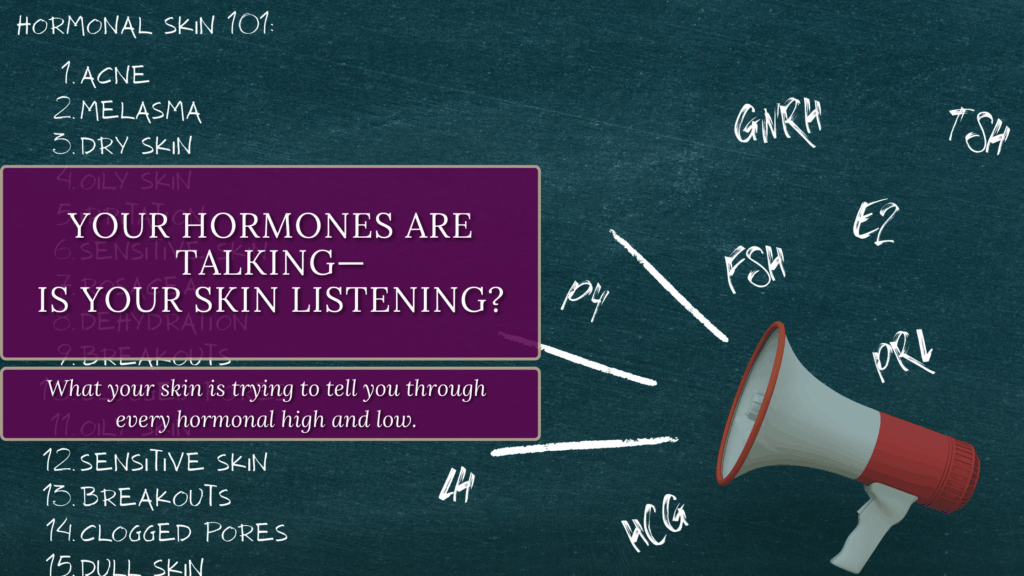
How is skin affected by infertility? Well, that’s a complicated question, with a relatively complicated answer. However, when we break it all down into chunks, it actually makes a lot of sense. Before I jump into the specifics, I want to remind you that everyone’s skin is different and every person’s skin reacts differently to changes. But what changes, you ask? Well, everything from hormonal changes to environmental changes among others. So, when I talk about disaster or delight, I’m talking about the skin’s positive or negative reactions to internal changes (ie. hormonal changes) or external changes (ie. environmental). Confused? Don’t be! I’ve got some fascinating info to share in this post, so read on. How skin is affected by infertility Infertility Before I dive into hormones and how skin is affected by infertility, let’s talk about infertility and why it would have anything to do with skin anyway! First off, what exactly is infertility? The definition of infertility, according to dictionary.com is: The persistent inability to achieve conception and produce an offspring. However, when we talk about infertility in every day terms, it’s more specific. According to the CDC: In general, infertility is defined as not being able to get pregnant (conceive) after one year (or longer) of unprotected sex. Because fertility in women is known to decline steadily with age, some providers evaluate and treat women aged 35 years or older after 6 months of unprotected sex. So, infertility is an inability to conceive, but specifically within a certain timeframe. Age is used to define it even further. Infertility & Hormones Now that I’ve given you a general understanding of infertility, let’s talk a little bit about how hormones play a role. First, there are a variety of hormone disorders that can affect fertility. PCOS (polycycstic Ovarian Syndrome) Hyperthyroidism Hypothydroidism Anovulation (ovaries don’t release eggs) Endometriosis While there are plenty of other hormone disorders that can affect fertility, these are the most common. The common factor among these disorders, is the level of the hormone in the body. Too much, or not enough of a particular hormone causes the disorder and can affect fertility. Hormones & Skin But, how is skin affected by infertility? Let’s start with breaking down the hormones involved in the disorders mentioned above. Hormone disorders can wreak havoc on your skin, and that can cause stress, frustration, anxiety, and of course, general annoyance! The hormones from the disorders above that affect the skin the most are: Testosterone Insulin Thyroid Hormones (Thyroxine & Triiodothyronine) Estrogen Progesterone But, how do these hormones affect the skin? Well, each hormone has a different effect on the skin, but surprisingly, the effects aren’t always bad. It just depends on the person. The Hormones This is where I would normally give a skin anatomy 101 lesson. Luckily for you, I’ve already done that, so go check out this blog post to learn more about skin anatomy so you can understand my logic. Now that you’re a skin expert, let’s dive in and really find out how skin is affected by infertility! First and foremost, I want to talk about sebaceous glands. Sebaceous glands are located within the Dermis. They are attached to hair follicles and produce sebum. Sebum is a waxy oil made up of triglycerides, wax esters, cholesterol esters, squalene and other complex oils. Its main function is to coat, moisturize, and protect the skin from friction and excess moisture. Testosterone When Testosterone is released in excessive amounts, it triggers the sebaceous glands to produce more sebum. Too much sebum can clog the hair follicles, leaving the oily substance with nowhere to go. And what do you get when it has nowhere to go? Acne. Estrogen A decrease in Estrogen has an opposite effect to the increase in Testosterone I just talked about. Drops in Estrogen can cause thinning of the skin, wrinkles, and lack of moisture. This results in dry, flaky, and itchy skin. The decrease in Estrogen can also cause skin sensitivity. Thyroid Hormones The effect that the thyroid hormones have on the skin varies depending on whether there is too much or too little of them. Let me explain. Hypothyroidism is when the Thyroid gland is underactive, causing it to not secrete enough of the Thyroid hormones. On the other hand, Hyperthyroidism is when the Thyroid gland is overactive and causes it to create too much of the Thyroid hormones. So, an excess of the Thyroid hormones can cause skin thinning & red, swollen skin. While not enough of the Thyroid hormones can cause dry & coarse skin with a decrease in sweating. Progesterone Low Progesterone can cause acne, brittle nails and dry, cracked skin. Excess Progesterone, on the other hand, can have 2 different results. An increase in Progesterone causes the skin to swell. When the skin swells, it essentially closes off the pores. When the pores are closed sebum is prevented from escaping.. The resulting increase in sebum can have 2 very opposite effects: A nice glow to the skin Oil, oil, and more oil! Glowing skin is a nice side effect for sure, but that’s not going to be the case for everyone! The other group will experience very oily skin, and potentially… acne. *Like I said earlier: “The effects aren’t always bad. It just depends on the person. 📌 Pin me for later! Fertility Treatments & Skin When you’re dealing with a hormone disorder that could be causing infertility, then you are likely already dealing with some of these skin issues. But this is only part of how infertility affects the skin. The other part is fertility treatments. If you are doing fertility treatments or plan to, I think it’s helpful to know that some of these skin issues can be resolved. It’s also good to note that sometimes other skin issues can crop up. Either way, I feel strongly that it’s important to prepare for what could happen, so that it doesn’t surprise you. Let’s start with the different hormones that are often used in fertility treatments.