

Your Hormones Called—
They Want to Talk About Your Mood
How reproductive hormones influence your emotions, mindset, and mental wellness.
When Hormones Crash the Mood Party
Let’s be honest — hormones get a bad rap. They’re the scapegoat for everything from crying at commercials to rage-cleaning your kitchen at 11 p.m. But here’s the truth: your hormones aren’t out to get you. They’re just doing their job — and sometimes, that job involves taking you on an emotional roller coaster you definitely didn’t buy tickets for. Talking about how hormones affect mood and emotions, can create unnecessary stigma, but not here! We’re all about hormone-informed emotional wellness today.
Reproductive hormones — estrogen, progesterone, FSH, LH, hCG, prolactin, oxytocin, relaxin, testosterone, and the ever-dramatic cortisol — don’t just run the show for your reproductive system. They also play starring roles in your brain chemistry, energy, motivation, and emotional resilience. So, when those levels start shifting (as they do during infertility, pregnancy, postpartum, and perimenopause), your moods shift right along with them.
Before we dive in, if you haven’t yet read Your Hormones Are Talking—Is Your Skin Listening? — it’s a great companion piece to this one. Your skin responds with just as much attitude to hormones as your mind, so head over and check it out!
Infertility and TTC (Trying to Conceive)
When it comes to infertility and TTC, there are a variety of hormones involved because there are multiple categories that we’re talking about. Let’s break it down further to really hone in on each category and understand the effects of each. We have 3 main categories:
- TTC (Trying to Conceive)
- Infertility Diagnoses/Causes
- Fertility Treatments
TTC (Trying to Conceive)
What exactly does trying to conceive mean? Conception, in its most basic definition, is the fertilization of an egg by a sperm. That’s it. A sperm meets an egg, forms a zygote—the first human cell—and begins dividing into an embryo, then a fetus.
Even for people without fertility struggles, trying to conceive brings major hormonal shifts. In women, every ~28 days, reproductive hormones make themselves known and can wreak havoc on both body and mind.
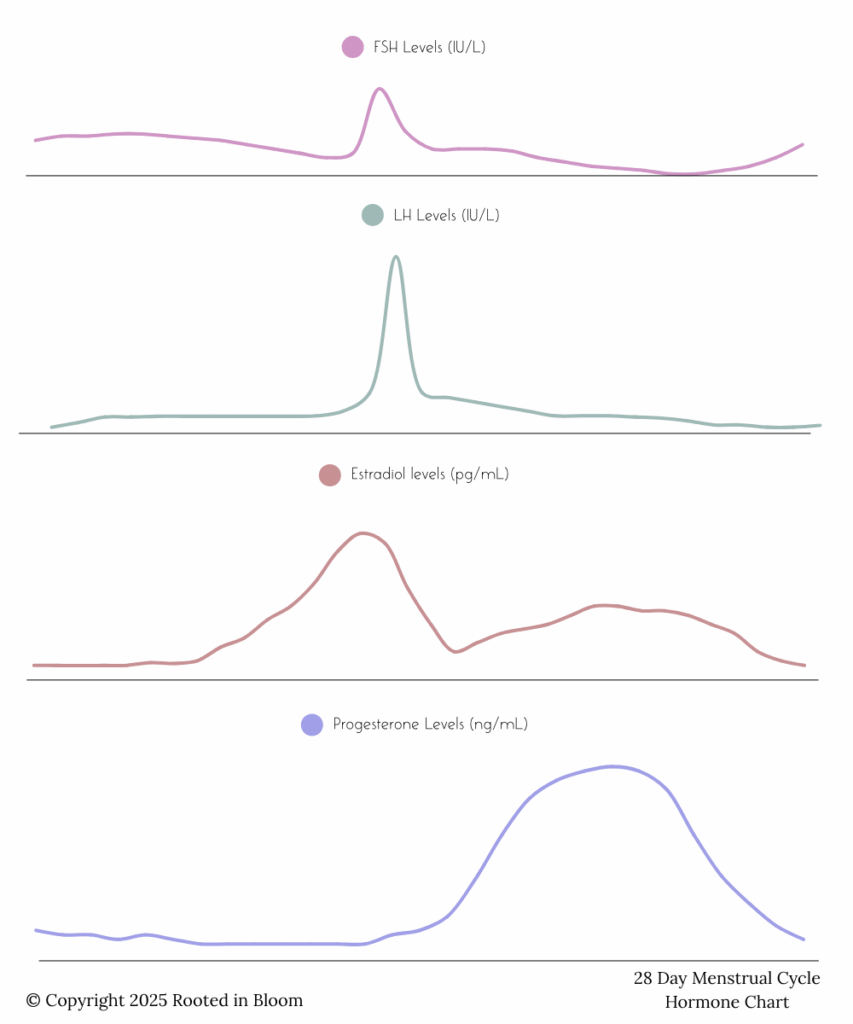
First and foremost, understanding the menstrual cycle is key. Four main hormones play a role: Estrogen, Progesterone (our trusty recurring duo), LH (Luteinizing Hormone), and FSH (Follicle Stimulating Hormone). Check out the menstrual cycle chart below for a visual of these hormones rising and falling.
Follicle-Stimulating Hormone (FSH)
FSH is produced by the pituitary gland and stimulates the ovaries to develop multiple follicles, each containing one egg. It also prompts estrogen production, which thickens the uterine lining to prepare for implantation. FSH spikes just before ovulation, then drops, while LH surges right at ovulation.
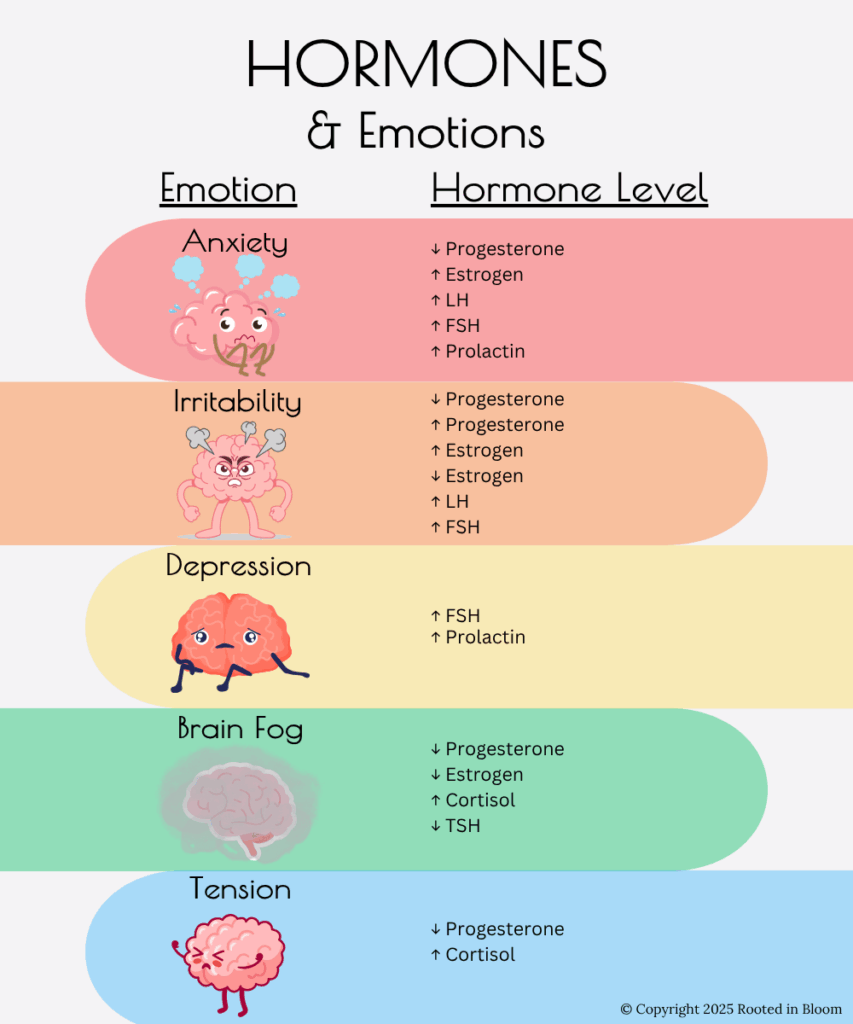
These hormonal spikes and drops can affect mood. High FSH levels may influence neurotransmitters like Glutamate, GABA, Dopamine, and Serotonin, potentially contributing to anxiety, depression, and irritability. For a deeper dive into neurotransmitters, check out this Cleveland Clinic article or this one from the National Library of Medicine.
Luteinizing Hormone (LH)
LH helps the dominant follicle mature for ovulation and stimulates progesterone production via the corpus luteum. LH surges at ovulation and then drops. Fluctuations, especially under stress, can trigger mood swings, anxiety, and irritability, while low LH is less impactful emotionally.
Estrogen
Produced by developing follicles, estrogen drives ovulation and prepares the uterus for implantation. It also regulates menstruation and cervical mucus production. When estrogen drops after ovulation (if pregnancy doesn’t occur), mood swings, irritability, and anxiety may follow. Estrogen helps regulate serotonin and dopamine, so low levels can also increase cortisol—the stress hormone.
Progesterone
Progesterone thickens and maintains the uterine lining. After ovulation, its rise has a calming effect. But when it drops (PMS alert!), irritability, sadness, anxiety, tension, and brain fog can emerge.
Infertility Diagnoses and Causes
Hormones often play a direct role in infertility. The following infertility causes are prime examples, though this is not an exhaustive list:
- Diminished Ovarian Reserve (low AMH): Fewer eggs, harder conception, and potential mood effects from low AMH levels.
- PCOS (Polycystic Ovary Syndrome): Inconsistent FSH, LH, and progesterone, plus high androgens, can contribute to stress and anxiety.
- Hyperprolactinemia: High prolactin can suppress ovulation and increase depression, anxiety, or hostility.
- Thyroid Disorders: Both hyper- and hypothyroidism affect fertility and mood.
- Endometriosis: Hormonal imbalances can cause emotional disturbances along with fertility challenges.
Fertility Treatments
Fertility treatments impact hormones differently depending on the procedure.
IVF (In Vitro Fertilization)
IVF retrieves eggs after ovarian stimulation, fertilizes them in a lab, and transfers embryos into the uterus. Hormones like FSH, LH, estrogen, progesterone, and synthetic hCG are used, affecting emotions and physiology.
Emotional Impact:
- Hormone fluctuations
- The intense spikes and drops in hormones (both naturally produced in the body and synthetic that are injected) can cause extreme ups and downs, emotionally
- Overwhelm from infertility + IVF procedures (multiple injections, strict schedules, lab visits)
- Infertility is a unique kind of stress and anxiety that gets intensified by the hormonal fluctuations
- IVF is not a simple procedure or process. It takes time, education, many doctor’s visits and imaging, many injections and blood draws, and so on.
The overwhelm of infertility alone is extremely heavy, just as the overwhelm of just IVF. However, add them together PLUS the erratic joyride that the hormones are embarking on and it’s a recipe for extreme emotional overload.
IUI (Intrauterine Insemination) with Oral/Injectable Medications
Injectables
Injectables like Gonal-F, Follistim, Menopur, hCG “trigger shots,” such as Ovidrel, Novarel, & Pregnyl, and Lupron influence hormone levels directly and can cause mood swings, anxiety, irritability, fatigue, and sometimes anger.
To get a fuller picture of IVF medications check out this article by Society for Assisted Reproductive Technology
Here’s a “Fun” Lupron Story:
A few days into my Lupron injections before egg retrieval, I had a meltdown over a cheeseburger because I insisted on cheddar instead of American. Cue tears, anger, and eventual realization that I actually always order it without cheese. Hormones, right?
Cortisol
Cortisol—the stress hormone—often spikes with the emotional and physical overwhelm of infertility and fertility treatments.
Pregnancy
Pregnancy begins when a sperm cell fertilizes an egg and that tiny new life (an embryo) implants itself into the lining of the uterus, also known as the endometrium. From there, the magic—and the hormonal chaos—really begins. Pregnancy lasts about 40 weeks, broken into three trimesters of roughly 13 weeks each. Each trimester comes with its own hormone cocktail and emotional curveballs (lucky us).
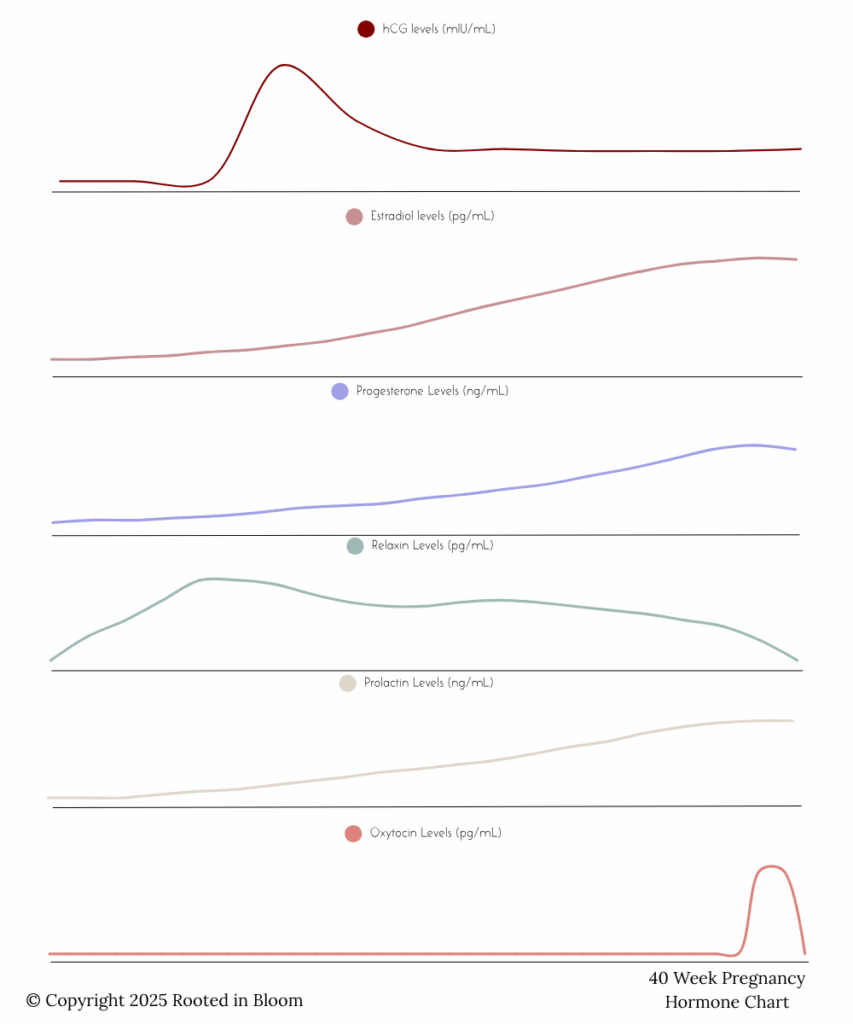
If you’ve glanced at the pregnancy hormone chart below, you’ve already seen the dramatic hormonal acrobatics happening behind the scenes. The first trimester alone is a wild ride—hCG spikes sky-high and then levels off just in time for Estrogen and Progesterone to take over the show. These hormones are essential for maintaining pregnancy, but they also have opinions—and they’re not shy about sharing them with your emotions.
Let’s unpack what’s happening trimester by trimester.
First Trimester (Weeks 1–13)
The hormone hCG—human chorionic gonadotropin—is the first to rise. It’s the hormone that gives you that positive pregnancy test and keeps the corpus luteum (the structure left behind after ovulation) producing progesterone to sustain the uterine lining. While hCG doesn’t directly affect mood, it does play a big role in early pregnancy nausea. (Morning sickness? You can thank hCG for that.)
Meanwhile, Progesterone levels climb rapidly to keep the uterine environment calm and cozy for your developing baby. High progesterone can cause fatigue and a sort of dreamy calmness, but it can also bring on mood swings and irritability. It’s a hormonal tightrope—one minute you’re zen, the next you’re crying over a toothpaste commercial.
Estrogen, another key player, rises steadily throughout pregnancy, stimulating blood flow, promoting fetal organ development, and—yes—adding to the emotional rollercoaster. Elevated estrogen levels are linked to anxiety, irritability, and sudden bursts of emotion (happy tears count, too).
Second Trimester (Weeks 14–27)
By now, hCG has stabilized, and the nausea often eases up (hallelujah). Estrogen and Progesterone continue their steady climb, supporting fetal growth and keeping your uterine muscles relaxed. Emotionally, this is often referred to as the “honeymoon phase” of pregnancy—you might feel more energetic, connected, and emotionally balanced. But not always! Every body and every hormone balance is different, and some people still experience plenty of ups and downs.
Behind the scenes, a new hormone enters the picture: hPL (human placental lactogen). Produced by the placenta, hPL regulates your metabolism and helps your body prepare for breastfeeding by stimulating milk gland growth. Interestingly, research on hPL’s emotional effects is mixed—some studies suggest low levels are linked to anxiety and depression, while others suggest the opposite. Either way, it’s clear that hPL is doing a lot more than just baby prep.
Third Trimester (Weeks 28–40)
As the body gears up for birth, hormone levels continue to rise—especially Estrogen and Progesterone—but now we start to see other hormones step into starring roles.
Prolactin, which stimulates milk production, begins to rise more noticeably. Beyond its practical function, it also supports emotional stability by influencing brain regions connected to nurturing and empathy. Those “nesting instincts” and waves of protectiveness? You can thank Prolactin for those.
Oxytocin, the famous “love hormone,” also starts increasing toward the end of pregnancy, promoting relaxation, social bonding, and feelings of connection between you and your baby. It’s also crucial during labor and delivery—helping the uterus contract effectively and flooding your system with a natural sense of calm and love (because, let’s be honest, you need it).
Then there’s Relaxin, a hormone whose main job is to loosen ligaments and joints to make room for delivery. While it doesn’t directly affect mood, it definitely affects comfort—pelvic pain, joint instability, and that awkward waddle? Yep, Relaxin’s doing its thing.
By late pregnancy, your hormones are at all-time highs, and your emotions may be right there with them. One minute, you’re marveling at your body’s strength and purpose; the next, you’re sobbing over a dog food commercial. All of it is normal. Your body is working overtime to grow and protect a human being—hormones are simply the (very loud) messengers making sure that happens.
Postpartum
The Hormonal Drop After Birth
If pregnancy is a hormonal crescendo, the postpartum period is the dramatic drop that follows. Once the baby arrives, your body shifts from “grow a human” mode to “keep a human alive” mode practically overnight—and your hormones rush to keep up.
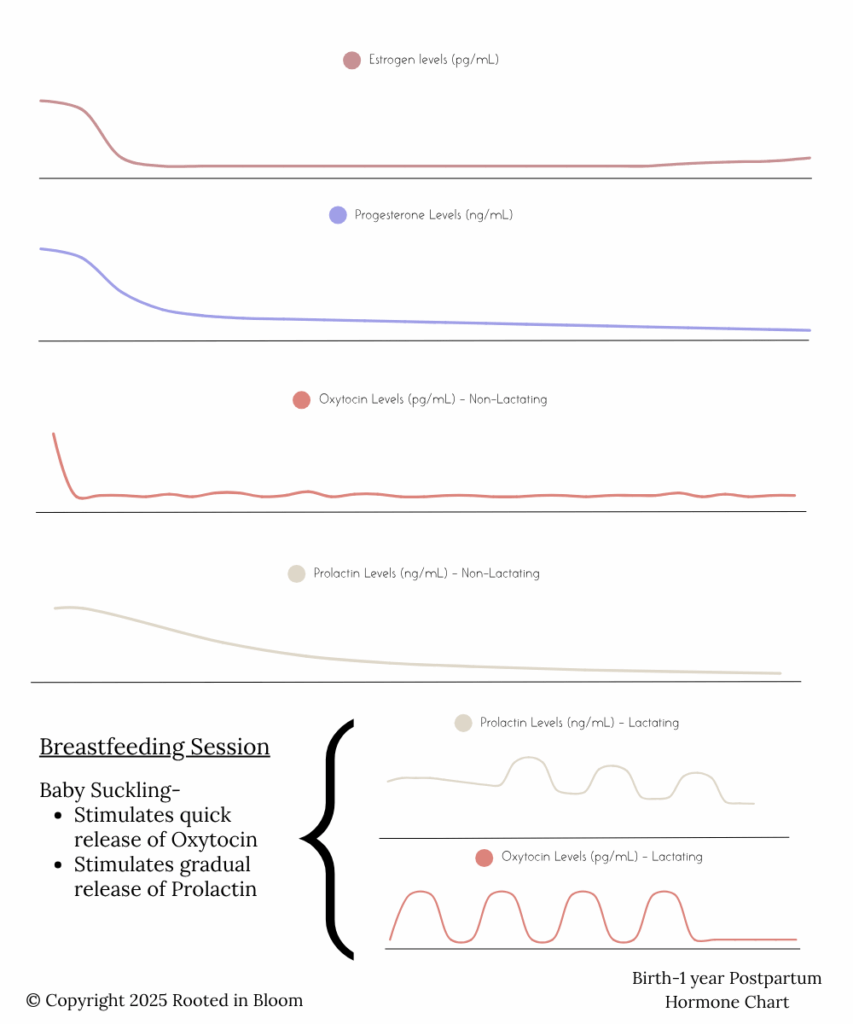
Immediately after childbirth, your levels of Estrogen and Progesterone plummet. Remember, these two hormones were being produced by the placenta, and once the placenta is delivered, it’s as if someone yanked the plug out of the hormone outlet. That sudden loss is one of the biggest physiological shifts your body will ever experience, and your emotions feel it too.
Crying for no reason? Feeling inexplicably anxious, irritable, or fragile? Totally normal. These emotional dips are the direct result of those sharp hormonal drops. It’s your body recalibrating—though, to be honest, it doesn’t feel like a simple “recalibration” when you’re in the middle of it.
Now let’s talk about Cortisol, the so-called “stress hormone.” Cortisol spikes immediately after childbirth as a normal biological response to the stress and trauma of delivery. Your body has just done an Olympic-level feat of endurance, and cortisol is there to help you recover and respond to this intense transition. For some, those levels gradually decrease as the body settles into its new normal. For others, especially those facing sleep deprivation, breastfeeding challenges, or emotional overwhelm, cortisol can stay elevated for longer periods—making it harder to feel calm or rested.
Oxytocin and Prolactin — The Bonding Hormones
And then there’s Oxytocin, our crossover star. Oxytocin is the great connector between body and mind—it’s both physiological and psychological. Often called the “love hormone,” oxytocin plays a massive role in bonding with your baby, reducing stress, and triggering those feelings of deep, primal love and protectiveness. It’s also the hormone that helps your uterus contract after birth and, later, helps you breastfeed.
During nursing, Oxytocin triggers the let-down reflex—that moment when milk is released from the breast—and Prolactin works alongside it, stimulating milk production. Oxytocin acts almost immediately when your baby latches, while Prolactin rises more slowly, peaking around 30 minutes into feeding. The two work in a perfect hormonal duet: Oxytocin handles delivery; Prolactin handles supply.
When the Emotional Shifts Feel Like Too Much
But these hormones don’t just influence your body—they deeply shape your emotions. Oxytocin promotes calm, connection, and even euphoria, while Prolactin contributes to nurturing instincts, emotional stability, and empathy. Together, they help buffer the emotional impact of the massive hormonal changes happening elsewhere.
Of course, not all postpartum hormone shifts feel like a warm glow. The simultaneous drop in Estrogen and Progesterone, coupled with fluctuating Oxytocin and Prolactin, can lead to intense mood swings, anxiety, and tears that seem to appear out of nowhere. Add in the physical exhaustion, lack of sleep, and life-changing responsibility of caring for a newborn, and it’s no wonder so many new mothers feel like their emotions are all over the place.
As you can see in the postpartum hormone chart above, the hormonal landscape during this time is anything but linear. Levels rise and fall rapidly, and everyone’s timeline looks a little different. Even if this isn’t your first baby, your body still goes through this intense readjustment process each and every time.
In other words: postpartum emotions aren’t just about “baby blues.” They’re about chemistry—raw, real, and powerful. Understanding that doesn’t erase the hard parts, but it can make them feel a little less mysterious.
Perimenopause
Let’s be honest—if it feels like everyone suddenly started talking about perimenopause in the last couple of years, that’s because… they did. Not long ago, it was barely even mentioned. Most people only heard about menopause—the finish line—without any real discussion about the long, bumpy road that leads there. Even many doctors didn’t (and still don’t) receive much training on perimenopause in medical school. In fact, a growing number of gynecologists are now self-educating on it, right alongside their patients.
So, if you’ve ever thought, “Why didn’t anyone warn me about this?” —you’re not alone.
What Is Perimenopause, Really?
Perimenopause is the transition period leading up to menopause, when the ovaries gradually slow down estrogen and progesterone production and reproductive functions begin to wind down. But the keyword here is gradually—and that’s where things get complicated.
The main hormones at play are the usual suspects: Estrogen, Progesterone, FSH (Follicle Stimulating Hormone), LH (Luteinizing Hormone), Testosterone, AMH (Anti-Müllerian Hormone), and our old friend Cortisol. During perimenopause, these hormones stop following a predictable rhythm and start behaving like unsupervised toddlers—erratic, unpredictable, and occasionally unhinged.
Why There’s No Hormone Chart for This Phase
Because of that, you’ll notice there’s no hormone chart above for this phase. Unlike the other reproductive stages—where hormone levels rise and fall in relatively structured patterns—perimenopause has no real schedule. Hormones fluctuate wildly from day to day, month to month, and even hour to hour. It’s not you—it’s your chemistry.
Emotional and Physical Effects of Hormonal Fluctuations
These hormonal swings can lead to a wide array of symptoms, both physical and emotional. The most common ones include:
- Mood swings and irritability (because estrogen affects serotonin and dopamine—your feel-good neurotransmitters)
- Anxiety or low mood (as progesterone dips and estrogen spikes unpredictably)
- Brain fog (thank you, cortisol and estrogen shifts)
- Hot flashes, fatigue, insomnia, and changes in libido
And that frustrating sense that your body and brain are sometimes on completely different pages
Essentially, perimenopause is like puberty in reverse—except this time, you have bills, responsibilities, and probably a favorite joint cream.
On an emotional level, these fluctuations can feel exhausting. One day you might feel like yourself again; the next, you’re irritable, foggy, and ready to cry over a minor inconvenience (or possibly nothing at all). Estrogen, progesterone, and cortisol are constantly reshuffling their roles, and your mood gets dragged along for the ride.

The Bottom Line — A Lifetime of Hormonal Evolution
Finding Compassion in the Chaos
And there you have it.
The reproductive journey—from infertility and TTC, through pregnancy and postpartum, and into perimenopause—isn’t just a series of biological phases. It’s a lifetime of transitions, each one uniquely complex, emotional, and deeply human.
Emotional and Physical Effects of Hormonal Fluctuations
It’s a lot—and sometimes it can feel like too much. Each of these intense phases brings its own emotional and physical challenges, and it’s okay if you’ve felt like you’re barely hanging on.
Each stage brings its own cocktail of hormones, and with them, its own emotional landscape. One moment, your body is creating life; the next, it’s recovering from it, or preparing to release that chapter altogether. It’s no wonder that we sometimes feel like strangers in our own skin.
Through all of it, one truth remains constant: you are not alone. Every woman walking this path, in one way or another, has felt the overwhelm, the confusion, the frustration, the exhaustion—and the fierce resilience that comes with navigating it all.
Ready to Understand Your Hormones on a Deeper Level?
Your hormones have had plenty to say about your mood—now they’re in cahoots with your skin!
💋 Pop over to “Your Hormones Are Talking—Is Your Skin Listening?” to get the full story.
And if your skin, body, or sanity could use a little extra love, I offer hormone-informed coaching, massage, and facial services for every wild, wonderful, three-ring-circus phase of womanhood.
✨ Book a free intro call and let’s make those hormones play nice. 😉


Author: Cara B.
Cara B. is a Licensed and Board Certified Massage Therapist, Nationally Certified Continuing Education Provider, Licensed Esthetician, & Reproductive Wellness Coach with over 23 years of experience in the beauty and wellness industries. She has a strong background in reproductive wellness including infertility, pregnancy, postpartum, & perimenopause gained through continuing education as well as firsthand personal experience in each of her areas of specialty. Cara is passionate about women’s reproductive wellness and enjoys helping readers by sharing her knowledge and personal experience through stories, education, and more.
